Listen, Review & Subscribe
If you enjoy the episode, please leave me a review on your favorite platform!



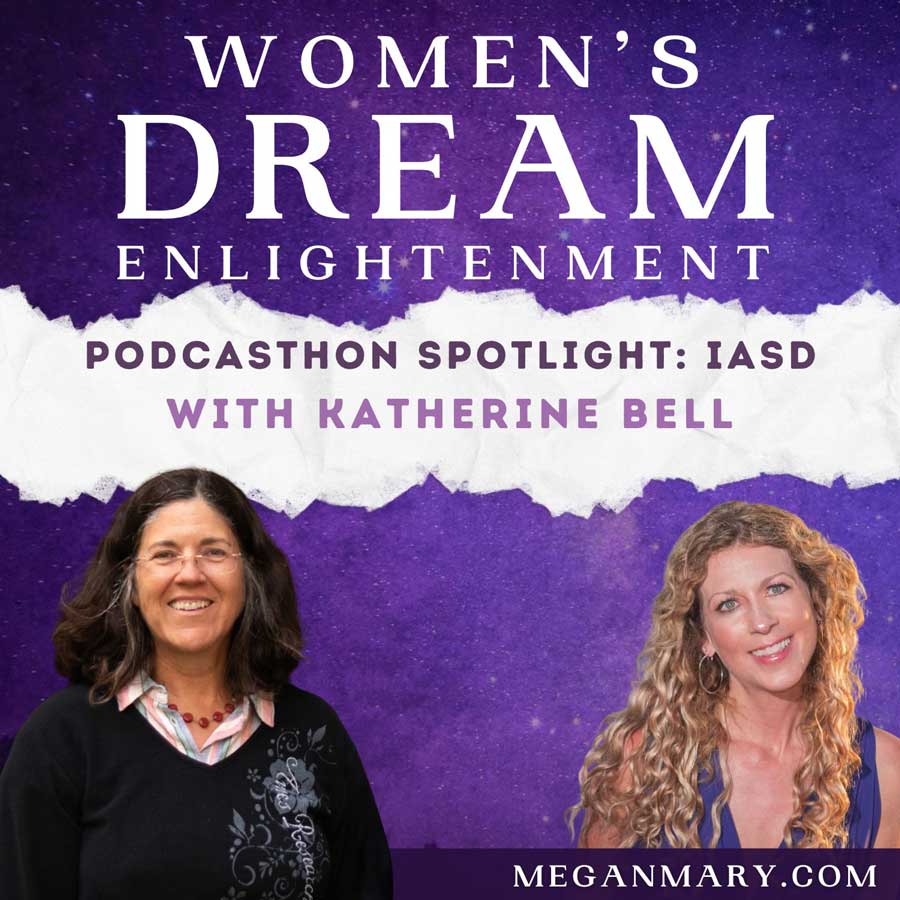
Women’s Dream Enlightenment | Episode 86
In this bonus episode, I welcome Dr. Katherine Bell of IASD Ethics Committee to discuss IASD’s mission as a nonprofit, multidisciplinary organization promoting dream research, application, and public appreciation.
We talk about lucid dreaming research, including Stephen LaBerge’s sleep-lab findings, and how dreamwork can strengthen connections between thinking and feeling.
Katherine also shares about the upcoming 43rd annual conference June 13–17 in Ashland, Oregon and the various conference events including calls for artwork, presentations, and volunteers, plus highlights like the Dream Ball and Psi Dream Contest.
Podcasthon
Podcasthon is the world’s largest podcast charity initiative, bringing together podcasters globally to raise awareness for charitable causes. This special episode highlights IASD.
IASD: The International Association for the Study of Dreams
The International Association for the Study of Dreams is a nonprofit, international, multidisciplinary organization dedicated to the pure and applied investigation of dreams and dreaming. Their purposes are to promote an awareness and appreciation of dreams in both professional and public arenas, to encourage research into the nature function, and significance of dreaming, to advance the application of the study of dreams, and to provide a forum for the eclectic and interdisciplinary exchange of ideas and information. The organization brings together clinicians, researchers, artists, and dream enthusiasts from around the world.
Katherine Bell: From Astrophysics to Experiential Dreamwork
Katherine R. Bell, PhD (astrophysics), Santa Cruz CA, USA has hosted the weekly interview podcast, The Dream Journal podcast, since 2019. She has been facilitating dream groups and workshops for 35 years and has been a coach for over 15. She is seeking a publisher for her first book about dreaming. Katherine is on the IASD Board of Directors and the Ethics Committee and is Conference Planning Co-Chair.
Dream Ethics
IASD has an Ethics and Confidentiality statement which define the Ethical Criteria for Dreamwork Training. At the heart of these policies is the assertion that the dreamer is the final authority on their own dream.
Lucid Dreaming
One of the first books I discovered on dreams was Steven LaBerge’s Lucid Dreaming. I was fascinated by the concept and found I could easily induce the experience after concentrating on the tips shared in the book, especially the reality testing and hand observance practices.
Annual Dream Conference
Every year IASD hosts an annual dream conference which features over 100 presenters and multiple thematic talk tracks, from workshops to scientific research. It also includes a PSI dreaming contest, art contest, and dream ball where you can dress like a character from your dreams. I was honored to present at the 42nd Annual International Association for the Study of Dreams as part of the Spiritual and Philosophical Symposium on Dreams as Sacred Portals: Unlocking the Path to Spiritual Awakening.
Experiential Dreamwork and Dream Sharing
Katherine believes that dreams should be appreciated as valuable experiences, that don’t need to be understood or analyzed. Her motto is, “ A dream can be meaningful even if you don’t know what it means.” What’s more important is that you’re sharing them.
Dream Recall & Intuition
Katherine uses voice-to-text on her phone to capture her dream memories and she shares a dream about azaleas that give her profound insight. We discussed how dream work can actually build connections between the thinking brain and the feeling brain. And most importantly, heightens intuition.
Before and After Dreaming
One of my fascinations is with the states we enter into and out of before and after we dream, known as the hypnagogic and hypnopompic states respectively. As part of my PhD in Metaphysics, this will be an area that I will be deeply researching in preparation for my first non-fiction book on dreams. The title of which is hidden in Book 2, The Dream Mirrors, for which Katherine kindly endorsed!
Dreams as Doorways
Katherine shares her experience studying Tibetan Dream Yoga and the theory that dreams are essentially a training ground for the afterlife, with the belief that if we can attain lucidity in our dreams, we may be able to in the afterlife as well. Anyone who has read my books knows a recurring theme for my dreams has to do with doorways and windows.
If you enjoyed our discussion and are interested in more inspirational insights, I invite you to consider a dreamwork session and explore my international bestselling metaphysical trilogy, Witches of Maple Hollow.
Listen and subscribe on Apple Podcasts, Spotify, Stitcher, iHeart, Pandora, Amazon Music, TuneIn, Podchaser, or on your favorite podcast platform.
Links
Follow Megan
- YouTube
- Threads
- Pintrest
- Tiktok
- InsightTimer
- Bluesky
- Alignable
- Audible
- Amazon
- Books2Read
Follow Katherine Bell
Follow IASD
[00:00:00]
Megan Mary – MeganMary: Welcome Women’s Dream enlightenment is very happy to participate in the fourth edition of Podcasthon for one week thousands of podcasts will highlight a charity of their choice, and today I have the pleasure of welcoming Dr. Katherine Bell, member of the IASD Ethics Committee for the International Association for the Study of Dreams. Welcome, Katherine.
Katherine Bell: Thank you, Megan. So glad to be here.
Megan Mary – MeganMary: Thank you. The International Association for the Study of Dreams is a nonprofit, international, multidisciplinary organization dedicated to the pure and applied investigation of dreams and dreaming. Their purposes are to promote an awareness and appreciation of dreams in both professional and public arenas, to encourage research into the nature function, and significance of dreaming, to advance the application of the [00:01:00] study of dreams, and to provide a forum for the eclectic and interdisciplinary exchange of ideas and information. A trained astrophysicist. Katherine worked for NASA for 11 years as a space scientist, a dreamwork practitioner. She is the founder of experiential dreamwork and has facilitated dream groups for over 30 years. Katherine is also the host of the Dream Journal podcast, which I have been a guest on,
Katherine Bell: Yes.
Megan Mary – MeganMary: is the host and creator of the Festival of Dreams, Santa Cruz.
Katherine Bell: That’s right. Yeah. I just keep going. I’m so enthusiastic about dreams that I have all these different outlets for for my enthusiasm and I, I think that’s something for everybody.
Megan Mary – MeganMary: I know how that is. Yes. And so today we’re really just gonna talk about the organization, how long you’ve been a [00:02:00] part of it, what it does events that are coming up. I guess it’s been around since the 1980s. So how long have you been a member?
Katherine Bell: I was only a member since 2017. I didn’t even know it existed until 2017. I had already hosted, I believe three conferences, dream conferences in Santa Cruz. Without, I didn’t even know that IASD existed. I was like, somebody should do conferences around dreaming, and I guess I’ll do that. And then I discovered the IASD and they’ve been doing conferences for something like 45 years.
And so I I hitched my bandwagon to theirs and I’m really happy to be part of this organization that has so many values that align with my own values. And as you’ve mentioned, Megan, the first thing that I joined was the ethics committee, because dreamwork is intense, dreamwork, it’s very personal.
It’s very vulnerable to share your dream with somebody, to share your longings, to share your emotional life. [00:03:00] And I think it’s incredibly exciting that the IASD takes the ethics of dreamwork very seriously. They hold our facilitators accountable and they have a very rigorous code of ethics about what is appropriate and what’s not appropriate in dream work.
Megan Mary – MeganMary: Yes, and I think that’s very important as well, because it differentiates. I know that there’s a lot of clinical and non-clinical people that are members. There’s artists and authors, and there’s also a lot of psychotherapists and, clinicians.
Katherine Bell: Yep.
Megan Mary – MeganMary: And it’s important to just be protecting the dreamer
Sure that they are put first and really in the seat of empowerment.
Katherine Bell: And that is the heart of the ethics statement of the IASD, which you can find on their webpage, the as dreams.org. You can find the ethics and confidentiality statement, which. Which the gist of the ethics statement is the dreamer is the final authority on their own dream. They are the ones who gets to say, if this [00:04:00] is what the dream means they can share a dream.
They can stop sharing a dream, they can leave the room. They have the total choice. When discussing a dream, whether it’s one-on-one with a friend, with a therapist in a group, at one of the big conferences at the ISD, the dreamer. Has that authority and I think that’s really valuable to put this power into the individual Dreamer.
Megan Mary – MeganMary: Yes, I agree. And I also really value that they dream appreciation.
Katherine Bell: There’s a whole category you listed a wonderfully on the different people who come to the conferences who are members of IASD. And there’s also, all the artists, the clinicians there’s also a lot of research. There’s a lot of research being done in sleep studies and, there’s people who are interested in spirituality and lucid dreaming, and it’s really silo busting that gets people out of their silos. But one of the big categories of people who belong to [00:05:00] IASD who support our cause are what they call dream enthusiasts. People who just love their own dreams, and there’s something meaningful there.
And I wanna know more. And so this is like a really big category of people who support the IASD. They are called dream enthusiasts, and I think that’s a wonderful way to describe people who are interested in their own dreams.
Megan Mary – MeganMary: Yes, and it’s important for people to realize that you don’t have to be a psychiatrist to be part of this organization.
Be even a painter that
Katherine Bell: yes. I.
Megan Mary – MeganMary: dreams, or an author like myself that writes your dream inspired stories. can be anything that follows those lines of ethics and emphasizes your dream experience.
And yeah, the research is fascinating and the organization does fund a number of research over the years and I always was fascinated by the sleep science
The sleep labs and what they were [00:06:00] doing , I think one of the first books I read about Lucid was Lucid Dreaming by Stephen LaBerge
and he was one of the first people to do those sleep lab studies where they were really trying to push those boundaries of what was possible in
Dream world. And now with all of this new wearable technology and everything that we have, it’s really advanced.
Katherine Bell: Stephen LaBerge was one of the first people who actually proved that people really were becoming lucid in their dreams. ’cause of a lot of scientists who heard about Lucid dreaming, it was like that’s just your imagination. You’re not really conscious in your dreams, you’re not really aware of the dream and able to change what happens.
But he did sleep lab studies where he actually was able to look at the brain state, and I believe what his lab did was to show that during the lucid state, the prefrontal cortex actually comes back online. Now, the prefrontal cortex is the part of most [00:07:00] evolved. Evolutionarily part of our human brain, and it has a lot to do with judgment and decision making and planning.
A lot of the thoughts we have during the day happen there, but when we go to sleep, that part of our brain usually becomes quiet, and it’s the other parts that take over the brainstem, the hippocampus, the, hypothalamus and that these other parts of the amygdala, they, the other parts of the brain, the more emotionally laid in, the kind of the nonverbal parts are what are most active during dreaming.
I believe it was Steven LaBerge did studies of people lucid dreaming and he shows that their prefrontal cortex would come back online and wake up and while the person was clearly asleep, so that they actually were activating different parts of their brain during lucid dreaming. And that really gave a lot of a lot of evidence for the for that we are really doing something when we’re dreaming and when we’re lucid dreaming, we’re actually bringing our consciousness to the dream. And so it’s just, there’s a lot of other kinds of sleep studies that people do. [00:08:00] But this was one of the things that really started to let people know that dreaming had some something important going on.
There was something really valuable going on.
Megan Mary – MeganMary: I was so fascinated by that concept that I had to experiment with it and figure out how to do it, and. Know, it was shortly after reading the book that, I, I spontaneously started doing it, of course, because the more you read
Katherine Bell: Right.
Megan Mary – MeganMary: the more you’re suggesting it to your brain. And so
Fascinating stuff.
And
Touched on the spiritual aspect, which of course is also my wheelhouse because last June I was honored to be a presenter at the Annual International Dream Conference, and I presented on Dreams as Sacred Portals, unlocking the path to spiritual awakening. And so for me, dreams have been a huge part of my spiritual intelligence and part of my awakening journey.
And some people don’t necessarily [00:09:00] put that spiritual aspect on it, but for me it’s very much part of the spirit world.
Katherine Bell: Yeah.
Megan Mary – MeganMary: I know there’s a consort of members that also work in that space.
Katherine Bell: Oh, very much I am a I began as in the ethics committee when I got involved with the IASD, but pretty soon I was elected to the board. And after that I. Bob Hoss who is the one of the main who’s a conference chair who organizes these yearly conferences, which I wanna talk a little more about.
He saw that I was doing conferences here in Santa Cruz and he dropped in on some of our Zoom planning meetings and he was like, oh, come over here. We could use your skills to organize the big conferences. And so now I’m one, I’m a conference co-chair, and so me and Bob together put together these big conferences and it’s it’s really, it’s changed my life because I really can contribute on a larger scale now.
It’s really global. It’s an international scale. And just to go back to the science for a [00:10:00] minute there’s yearly awards, I think they’re called the Hartman Awards where we actually give money, give grants to be able to do research in dreaming, since it can be hard to get funding.
For dreaming. But so these conferences have tracks. So that’s what put me onto this
Megan Mary – MeganMary: Ah,
Katherine Bell: of thought is that we have there’s, there are four and a half day conferences and we usually have 120 presentations. And I’m the database manager I can all about it. And so we have a parallel tracks and so that people can choose to look at.
Art talks. They can look at clinical talks, they can look at research, and there’s even a track. That’s all we call it. Extraordinary Psi and Lucid, EPL. Extraordinary Psi and Lucid. So there’s a whole track of workshops and talks that are all directed at the extraordinary aspects of dreams, including lucid dreaming, out-of-body experiences and and things like that.
So this is a lot of interest in lucid dreaming and it’s it’s something that many people [00:11:00] turn to help their waking life, like dreaming in general, but specifically lucid dreaming. People often turn to that as they wanna have a better life.
Megan Mary – MeganMary: Yes. And there were so many different presenters and there was also the groups which you led,
Which was, like you said, very profound,
Very intimate, and also very emotional at
But so effective also just in, in your approach, which you call experiential dream work.
Talk a little bit about that.
Katherine Bell: Yeah. I call it experiential dream work because I like the idea that dreams are not a puzzle to be decoded, that they’re an experience. And so I look to the actual experience of the dream, and I trust that the dream is somehow valuable. Dreams evolved along with humanity. Heck they evolved along with every living creature that has been studied seems to have some kind of dreamlike interval during their sleep, including octopuses, [00:12:00] cuttlefish, even spiders. Can you believe it? That there’s periods during their sleep where they get active and then they go quiet and people, oh, that’s their dreaming. So there’s something valuable, something innately valuable about a dream, whether you ever write it down.
Telling anybody else about it, the dream itself is valuable and so I take the approach that I wanna work on the side of the dream. I don’t need to understand the dream. I may want to, I’m a human being. I’m curious, but I don’t need to understand it. So I take the dream as an experience. In fact, I have a podcast and my, my, my motto is, A dream can be meaningful even if you don’t know what it means.
Just think about your waking life experiences. So we have experiential dream work, a waking life experience. So you have a hug with your child, you go on a wonderful vacation with your partner. What is the meaning of these experiences? I don’t know that you can put words on it, and yet they are meaningful in our lives.
These relationships are meaningful, these experiences we have in [00:13:00] life are meaningful. And so I trust that the dream itself. As it is meaningful. And so I want to honor the experience of the dream. And I ask people that I’m working with questions about the dream. What did that feel like? Did you see anything else?
Did you notice any smells? And to get it into their body to. Trusting that setting up this neurological pathway that happened when the dream happened the first time, that’s valuable. Maybe even just, setting our brains into a certain pathway is what the dream was doing. ’cause I often have revelations in dreams that I don’t know what they mean, but there’s something seems like it opens up, something opens and so I trust that there’s something valuable going on.
And so I want to enhance the experience of the dream.
Megan Mary – MeganMary: Yeah, I think that’s the first step. What we talked about already with appreciation is recognizing that they are important because we as a society, at least [00:14:00] in our Western culture, we are not raised to value our dreams.
Katherine Bell: Oh, that was just a dream. Dear. Go back to sleep.
Megan Mary – MeganMary: Yes. And we’re at best taught to be possibly embarrassed or just private rejecting a little bit. And I think it, that’s at the point where a lot of people say I don’t dream. ’cause they’re
Hands of it.
Katherine Bell: Oh, yeah. I don’t, I don’t wanna talk about that. But you do, as you said, Megan you do, studies have shown that. Everybody dreams there. There are like a few very rare cases may mostly in terms of like brain damage
Megan Mary – MeganMary: Exactly
Katherine Bell: people don’t dream and it’s it’s not good. And so everybody dreams whether you remember them or not.
And just hearing this conversation, just like with the lucidity hearing this conversation, it’s more likely that you’ll remember a dream tomorrow night because you, we’ve been listening to dreams. Listen, some people talk about dreams.
Megan Mary – MeganMary: Exactly. Yes. It’s [00:15:00] the intent. It’s the practice. Just like meditating, just like yoga, just like affirmations, positive affirmations. that suggestion.
But you also can cultivate it like a
Katherine Bell: Yes.
Megan Mary – MeganMary: And the more you do it, the more the better you’ll get at it
To the point where you have too many and you can’t write them all down.
Katherine Bell: That’s a good problem to have.
Megan Mary – MeganMary: That’s my problem.
Katherine Bell: But there’s techniques. The thing is find something that works for you. Do you like to pen on paper? Do you like to type it into your computer Personally? And one of my favorite things is to take a device, a tablet or a phone again, into my notes function.
And then I use the voice detect. Voice to text function and speak the dream out loud. And then of course you have to go back and correct it. But it’s the quickest way to get the words on the page. And then it doesn’t take all day for me to do it, and it’s just a few minutes in the first [00:16:00] thing in the morning, and then later I can go back and look at it and I didn’t remember this, but I’m so glad I wrote it down.
Megan Mary – MeganMary: Exactly
Every time. Every single time. I think that’s one of the more fascinating things to me, is that I always try to convince myself that I’m going to remember it and I don’t, and even when I write it down, I still don’t remember it
Katherine Bell: Yep.
Megan Mary – MeganMary: it’s fascinating.
Katherine Bell: And yet, when I read a dream that I’ve written down, even if I’ve forgotten that, I even wrote a dream down when I read it. It’s oh, I know this is familiar. And often I can reconstruct the dream, the memory comes back,
Megan Mary – MeganMary: yes.
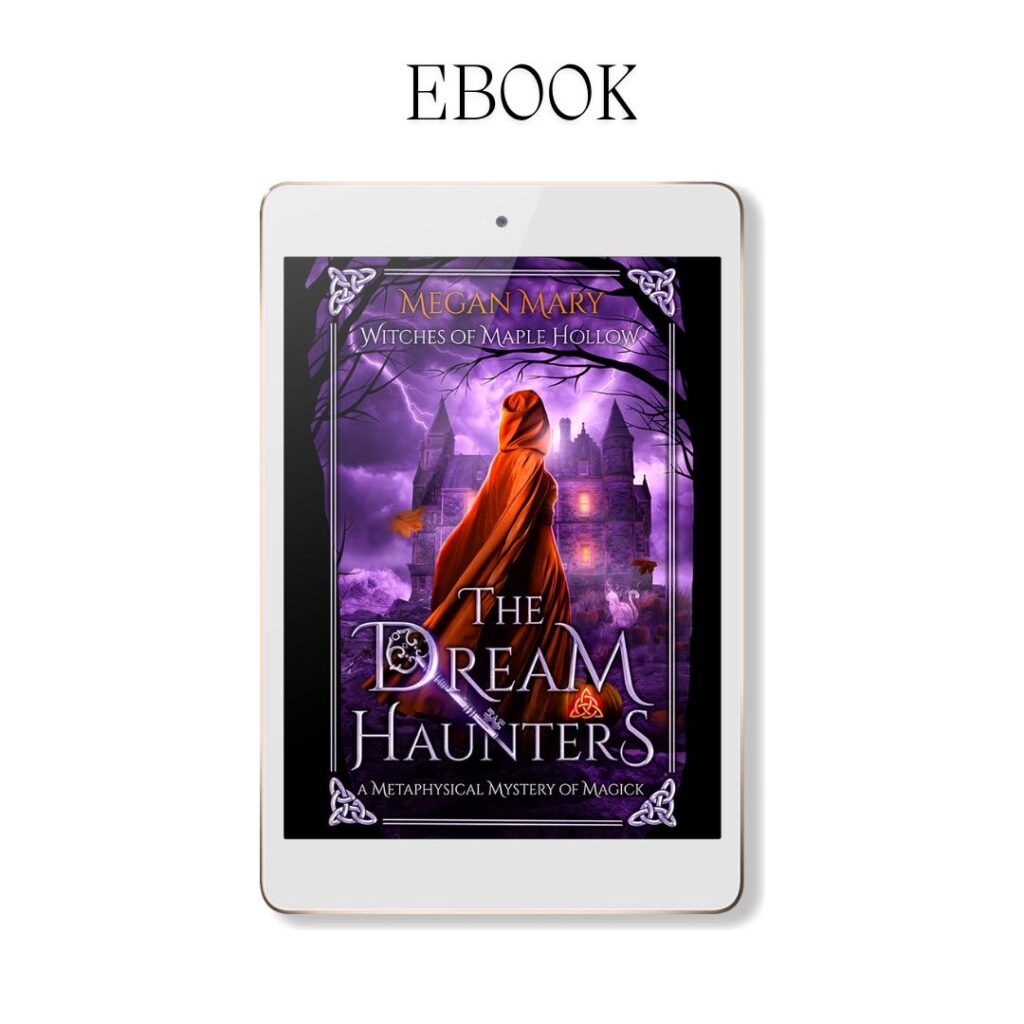
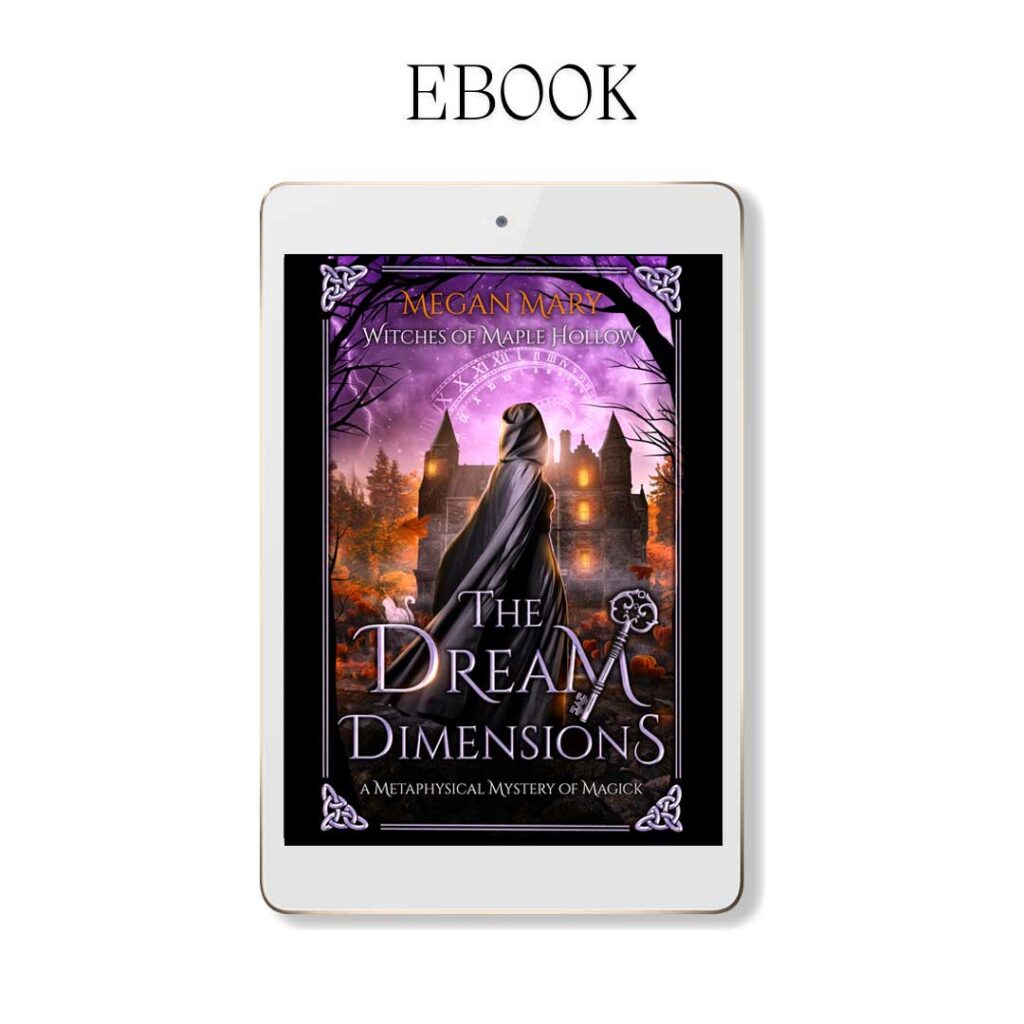
If you are enjoying my podcast and are intrigued by dreams and stories of spiritual awakening, I would like to personally invite you to explore my international bestselling metaphysical trilogy, witches of Maple Hollow, like a mystical fairytale. These fall themed mysteries weave cozy supernatural [00:17:00] fantasy into enchanting tales of magic and self-discovery.
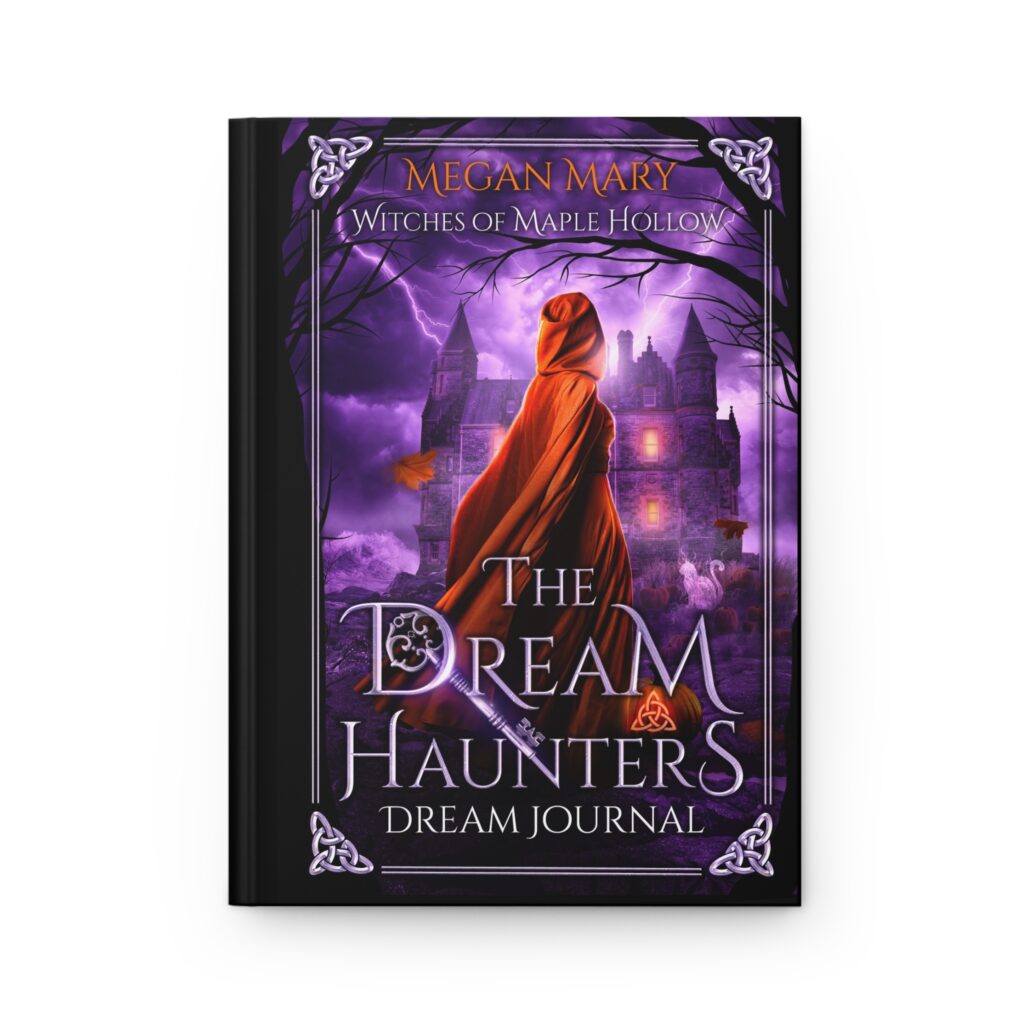
Start with Book one, the Dream Haunters. The book Life Prize calls it packed to the brim with surprise portals, ancient traditions, and dream worlds. Then dive into the elusive nature of reality in the dream mirrors. And finally unravel ancestral riddles beyond time and space in the dream dimensions. Get your exclusive signed copies today@meganmary.com.
Stop by the store while you’re there and grab your dream journals cozy blankets, pillows, candles, and more. And don’t forget, they also are available in audiobook. Come visit me in Maple [00:18:00] Hollow.
Katherine Bell: I think it’s because of this brain thing. Like I’m a bit of a scientist having, worked for NASA for all these years.
And so I, it’s fascinating to me that we even can remember any dreams because it’s the different parts of the brain are involved when we’re sleeping. It’s the nonverbal brainstem when we’re dreaming, especially and when we’re awake, it’s the prefrontal cortex. And so this. It’s amazing that any communication happens between them, but I’ve heard people say that studies have suggested that doing dream work actually builds connections between the the thinking brain and the feeling brain.
And so this, I think this is why I think you, I bet you’ve experienced this too, Megan, that doing dream work enhances intuition.
Megan Mary – MeganMary: Absolutely. A
Katherine Bell: It’s uncanny. It’s like now I’m like, I get an urge to do it, and like, why am I doing this? I don’t know. But it turns out to be just the right thing. And so learning to trust myself and learning to listen to myself, dreamwork [00:19:00] has been just a hundred percent about that.
Megan Mary – MeganMary: Yeah. Just like we know that brain synapses create connections when we learn new things or when we do habitual activities. It’s the same way in another way that when we start to do dream work, we start to make those connections between the subconscious and the conscious, and we also start to see our waking life differently because we’re viewing the dreaming life differently and they start to synergistically affect each other
Katherine Bell: Yes.
Megan Mary – MeganMary: In a very positive way,
Katherine Bell: Absolutely. Absolutely. And that’s why the, I think it’s tremendous value in bringing the dreams from Dream Life and bringing them into waking life. And can I share a dream with you? Right now, Megan. Okay. I love to share dreams. And this is one I had just a few nights ago. Gosh. Oh, actually it was yesterday morning and I woke up and it was one of those, oh, that’s just a nothing dream, but wait a minute.
Just write it down. And then later when I checked it off I was [00:20:00] like, oh, this is fascinating. So what the key thing that I’m remembering right now is that I am. I’m walking, I’m in a college, this is a very familiar theme for me to be in a college, walking around looking for my class, but I’m outside in the walkway and I see these azaleas that are just really abundant and they’re blooming and growing.
And I look down next to them and I realize there are seeds in the ground and saw. And I pull up these seeds as big as softballs, humongous seeds flattened, but as big as a softball. And in my mind, somehow that was an azalea Seed. Dreams are crazy that way. But I found these seeds and I was so excited and I took like a six or seven of these seeds and I and I found new places to plant them and I planted them along the walkways at this college campus.
And I was actually exploring this particular dream with my, one of my dream groups last night. ‘Cause I do my own dreams in those groups too. And I got the aha that I wasn’t taking them home to plant. In my [00:21:00] private space, I was planting them somewhere right next to the walkway where other people would see these azaleas blooming.
And I realized that this is how I feel about dreams. That I want everybody to start to appreciate their dreams and recognize that value and the help that we are getting from these dreams. And by planting these really big seeds and trusting that they’ll bloom. Even if I walk away and I never see that plant bloom, maybe somebody else will.
Megan Mary – MeganMary: That’s beautiful.
Katherine Bell: I really love it. I get this around my podcast fairly frequently. Someone will say contact me and say, oh, I listen to, four or five old podcasts and now I’m curious. I wanna talk to you. And it really helps me it really helped me recognize that I can get past my trauma or I can I can, I like to say it’s never too late to have a happy childhood that I can re-script my story of myself
Megan Mary – MeganMary: Yes.
Katherine Bell: and see myself as as, a resilient survivor instead of a victim. And
Megan Mary – MeganMary: absolutely.
Katherine Bell: [00:22:00] help that. And by planting these podcasts, I do one every week and I just do it and throw it out there, and I never know who’s gonna listen to them.
And it feels like those azalea seeds, I’m just putting them out there and. We’ll see who gets them. And I want as many people as possible to really enjoy the blossoms of the beautiful azaleas
Megan Mary – MeganMary: Are azalea’s flowers that come back every year. Just
Katherine Bell: They are. They’re bushes. They’re bushes. Yeah. They’re, but they’re, yeah so they come back, once they get established, they’ll come back every single year,
Megan Mary – MeganMary: oh,
Better.
Katherine Bell: Good question.
Megan Mary – MeganMary: Yeah. And one of the things that I’ve recently gotten super interested in, I’m finishing up my master’s in metaphysical sciences, and one of the things in regards to the dream states is the state before and after the dream that Hypnagogic and the Hypnopompic states. To me, those are the even equally, if not more fascinating, [00:23:00] particularly the Hypnopompic state, because that seems to be where I receive all of my information, not when I’m falling asleep, but when I am transitioning from dreaming to waking up. There’s this long extended. Transition where I’m receiving a lot of information.
Sometimes it’s people’s full names. It’s like phrases, messages, song lyrics, all kinds of
Katherine Bell: Wow.
Megan Mary – MeganMary: that I’m not necessarily getting in the dream. Sometimes I am, but that I’m receiving in this state and it’s equally easy to think that I’m gonna remember that. You don’t
Katherine Bell: No.
Megan Mary – MeganMary: still in that fatal a little
But for me, I think that’s gonna be one of the focuses of my nonfiction book on dreams that I’m starting to write, because I want to know everything there is [00:24:00] to know about that state.
Katherine Bell: That’s interesting. I haven’t seen a lot of research done on that, so that’s a really fertile topic to explore.
And I know the hypnagogic, when you’re first going into Dreams is a state that has been studied and it’s. There’s, one thing that comes to mind is it was Thomas Edison who invented the light bulb.
Apparently used to use the state frequently to when he was stuck on a problem. He was famously sleep deprived. He would, he didn’t care about sleep. But then when he was really stuck on a problem, what I’ve heard is that he would sit in a comfortable chair with some like heavy ball bearings in his hand over.
Metal bowl and then as he fell asleep and the ball bearings would drop and the clatter of the bowl would wake him up. And so just at that hypnagogic state as he is going in, and he would often have the solution to his problem.
Megan Mary – MeganMary: Yes, I think I’ve heard
Story and I think there’s other scientists too that would induce that [00:25:00] transitional state because they felt that in that state were the answers. And I really do think from a spiritual perspective that’s when we start to transition away from our egocentric consciousness and we start to have access to the universal consciousness.
And there’s a lot of wisdom out there that we’re filtering out when we’re in this waking state of do. And I personally think it’s like the golden hour,
Katherine Bell: Sleeping is the kind of sometimes I think of it as like a mini psychedelic trip that, you you get nudged along and because the dream brain state is actually somewhat similar to what happens when we’re in a. Psychedelic state, and it’s this kind of brain plasticity that happens in a psychedelic state.
Also happens when we’re dreaming that we can change our minds, like literally change the neural pathways. And it allows us to just nudge us along. Sometimes it’s dramatic, but usually it’s just a little bit [00:26:00] day by day, night by night. And if we don’t get enough sleep, then we really don’t have access to that state because the sleeps are way more potent, closer to dawn.
And if you are chronically sleep deprived, six hours, five hours of sleep a night, you’re probably not getting to that dream state enough. And so that’s a good argument for getting a full night’s sleep if you can, because that’s where a lot of the magic happens is in the dreams. It allows us to nudge ourselves along and to a happier life and more successful and satisfying.
Megan Mary – MeganMary: Absolutely. And the fact that you can literally lose touch with your, I don’t know, I don’t wanna say reality because reality is.
Katherine Bell: Is reality? Is this reality? I’m not sure.
Megan Mary – MeganMary: it’s subjective, but the fact that you can be basically lose it if you don’t sleep.
Katherine Bell: Yes.
Megan Mary – MeganMary: Shows us how much we require in so many ways. And it’s not just a [00:27:00] biological, I think it’s also spiritual and emotional
Katherine Bell: Yes.
Megan Mary – MeganMary: and that I think it’s because we are returning to the spirit state
When we’re sleeping, and we’re not meant to be here all
Katherine Bell: right.
Megan Mary – MeganMary: we can’t be.
Katherine Bell: No, and there’s some spiritual traditions. Talk about the spiritual state is that I’ve studied some Tibetan dream yoga and they value the dream state as a way of practicing what happens when we die. And that if you can become lucid during the dreams, it’s more likely you can become lucid as you go off into whatever happens after we die.
And they believe that the dreams are training ground or maybe even the doorway.
To, to that state that we’re gonna enter into after we pass away.
Megan Mary – MeganMary: Yeah, doorways
Katherine Bell: Yes, it is.
Megan Mary – MeganMary: theme in my dreams. And if there were one recurring theme, it would be doorways and windows.
Katherine Bell: Ah
that shows up in your books, Megan, I must say a lot of doorways and windows,
Megan Mary – MeganMary: It does,
Katherine Bell: portals.
Megan Mary – MeganMary: [00:28:00] one, just the other night, a couple nights ago, and the only part that I really remember at this moment is that it was like a spiral staircase that’s in the ground, like they used to have back in the seventies.
They used to have, it was like interior design element that they would have. And then there was a rotating circular door above it that had mirrors on both sides. And so you had to walk this rotating door enter the spiral staircase going down.
Katherine Bell: Wow. Wow.
Megan Mary – MeganMary: it’s
Katherine Bell: That’s.
Megan Mary – MeganMary: image in my mind
Katherine Bell: That is very cool. Like just to, yeah. So there’s, so I wanna get back to IASD ’cause I think that’s such an amazing organization and they have space for all of these dreams. All of these dreams. And more, like Megan mentioned, the whole morning Dream group phenomenon. That’s something that, that’s one of my big [00:29:00] passions is hosting groups.
Zoom now makes it so easy to get people together and really talk and create a, an intimate space. And and the nice thing about a group is it’s a recurring meeting, like at the conferences that we meet with the same people four days in a row, four mornings in a row. So you get to have your own little space where you get to know the people in the group and it becomes like a relational.
space and you get to feel nurtured by that. And in my groups we don’t interpret dreams. We just share the dreams. And just because I really want people to see that just speaking the dreams, like speaking my dream as I did and as Megan just shared her dream, that there is something really powerful about just speaking your dream to another human being.
And if get nothing else in this podcast. Just try it and spouse some friend, or just saying it out loud and maybe even say I don’t want any interpretation or anything. I just, I was just thinking about this dream and I wanted to say it out loud.[00:30:00]
Megan Mary – MeganMary: Yes.
Katherine Bell: very valuable to share these dreams.
Megan Mary – MeganMary: Yeah. And it’s a validating experience as well.
Katherine Bell: Yes.
Megan Mary – MeganMary: Yes. And I do wanna mention that. IASD has their 43rd annual conference coming up June 13th through 17th in Ashland, Oregon, and that they have currently open calls for artwork, presentations, and volunteers.
They’re looking for all that.
Katherine Bell: So you can go to asdreams.org and look out to the conferences, look to the current international conference, and you’ll find all kinds of information. We actually went to Ashland in 2023 and it was such a hit that we decided to go back, which is why we’re gonna be there again this year.
And it’s a very magical kind of hotel on the outskirts of Ashland, Oregon, which is this kind of. Magical Town. They host the Oregon Shakespeare Festival. That’s what it is. And in fact, we are gonna go together. We’re as a group through all 300 of us.
I guess whoever wants [00:31:00] to can buy a ticket to go together to the performance of Midsummer Night’s Dream as part of the conference. And this is just a great opportunity to get together and meet people who are interested in dreams. Maybe you didn’t know there was such a thing. Maybe you thought you were the only one interested in dreams, but you’ll meet amazing numbers of people who are as enthusiastic about dreams as you are.
And this just a lot of fun. You can attend any of the tracks, any of the topics you want. We have these fabulous keynote speakers. We have Claire Johnson, who is an amazing Lucid Dreamers, one of our invited speakers. We have Diane Hennessy. Ken Poller, who’s a scientist, and Loma Flowers, who is one of the founders of IASD.
She’s been around for a long time. And so we have one of my favorite things about the conference is on the very last night of the conference, we have I’m the host of the Dream Ball
we have the ball, and you experienced that in the online conference, Megan, even [00:32:00] online. Wasn’t it fun?
Megan Mary – MeganMary: yes, absolutely.
Katherine Bell: So what happens is you come dressed as a character, anything meaningful, any dream character that you find meaningful, and and it’s.
Megan Mary – MeganMary: Which I did.
Katherine Bell: Yeah, and it’s a dance party and we all have a live band, a world class band called The Rogue, rogue Suspects. And and we’ll just dance the night away. And it’s amazing opportunity to celebrate after this big conference with everybody. And, it’s really one of the highlights of the conference for me.
There’s also an art show they, where have artists bringing bringing their own artwork. And so there’ll be a room at the conference that’s gonna be filled with art that you can see and enjoy. That’s usually a Psi contest.
Megan Mary – MeganMary: I was
Katherine Bell: Yes.
Megan Mary – MeganMary: the SI dream contest. Love that.
Katherine Bell: That’s where they, they pick an image and then there’s one person who sees what the image is and they focus on sending it out during the course of the night.
And everybody in the conference who wants to participate dreams that night and they [00:33:00] try to channel that person and imagine what the images that person is seeing. And it’s an uncanny how close people can get sometimes to that image.
Megan Mary – MeganMary: Yeah, I’ve seen. Of the results, it’s wow, that was fun.
Katherine Bell: Yeah. Yeah. So we’ll have online conferences again in the future at some point.
This year it’s in Ashland. Next year is probably Atlanta, Georgia. And it’s just a great opportunity to to stretch yourself and and go deeper, get to meet yourself.
Megan Mary – MeganMary: Thank you for speaking all about that today. I’m gonna put links to a asdreams.org, and to all of your links as well the Festival of Dreams and all of your other links in the show notes.
Katherine Bell: Right.
I ever said the name of my podcast yet. It’s called The Dream Journal, and it’s a weekly podcast where I interview experts on dream and enthusiasts on dreams and and it’s originates as a live radio show and it’s, I’m up to episode 346.
So there’s a lot of, you can really educate yourself about dreams. If [00:34:00] you wanna take a look. It’s called the Dream Journal.
Megan Mary – MeganMary: Awesome. right, so if you enjoyed this bonus episode, feel free to visit podcasthon.org discover all the other charities through the voices and talents of all the other amazing podcasters that are taking part in this event. And check out the show notes for all of the other links. And thanks for being here, Katherine.
Katherine Bell: Thank you, Megan. Always a pleasure.
Thank you for listening. Did you enjoy this episode? Be sure to subscribe to make sure you never miss an episode. Head over to my YouTube channel. and hit that subscribe button as well to be part of my growing community. Are you ready to take the next step in your spiritual journey?
Don’t miss out on the new Dream Empowerment Programs, unique opportunities for you to unlock your inner [00:35:00] wisdom, discover your authenticity, align with your higher self, and bring abundance into your life. If you’d like your dream or awakening story. Featured on my show. Submit it today. Your dreams have the power to inspire and enlighten other women on their journey.
Visit megan mary.com to find out more.
As an Amazon Associate I earn from qualifying purchases.